Showing posts with label buy. Show all posts

Thursday, January 2, 2014

How to Care for Your Piano


Every Let's Play Music family needs a piano or digital piano for years 2 and 3 of the Let's Play Music curriculum.  Get tips on what to buy with our buying guide.  Now that you've got that taken care of, you might be wondering how to take care of your lovely instrument.

Moving the Piano

Perhaps your piano is already nestled in its permanent home, but if you've just purchased it or are moving house in the future, please consider having professional movers deliver it.  The correct equipment for moving pianos includes using ramps, piano-moving boards, piano dollies, piano-lifting straps and protective padding.  Professional movers can get your piano in place without damage (and minimal knocking out of tune.)

Chances are, your upright piano is up against a wall, as is mine, because the back of the piano is not all that attractive.  Experiment with pulling it a few more inches away from the wall, since most of the sound comes from the back, and this will allow some space for some nice resonance to help you get that sound projecting into the room.  You might also consider using the piano as a divider between two rooms or spaces: cover the back of the piano with fabric for an attractive appearance, and be rewarded with the acoustics.

Men lifting piano
Don't they make it look easy?

Key Cleaning

Sticky peanut-butter fingers are not the only things that take the shine away from your piano keys.  Just the oils and daily dirt on fingers can do the trick.  It's a fine idea to institute a "washed hands" policy to reduce the frequency for key cleaning.  Another fine habit is to close the cover when not in use to prevent dust on the keys.


Avoid using anything abrasive (chemicals, cleaners, or even paper towels.)  Use a flannel or microfiber cloth with some warm water, and wipe each key towards you (not side-to-side) making sure you get the sides of the black keys as well as the tops. Only clean one octave and then quickly wipe it dry before moving to the next octave. A gentle soap is okay if your keys are plastic.

If you are wanting to disinfect your keys during flu season, use a solution of 3:1 water:vinegar and wipe down as above.

Cabinet Cleaning

Modern pianos are finished with a variety of laquers and resins, designed for beauty without the addition of any wax or polishes.  Dust your piano with a feather duster or a specific piano-dusting mitt, or wipe away smudges using a slightly damp flannel using long straight strokes.

Since pianos are 85% wood that expands and contracts with humidity, you can protect your piano's finish, case, and pitch by avoiding swings in temperature and humidity whenever possible (the garage is not a good permanent home).  There are even piano-humidity devices available, and your kids will laugh every time you remind them to "go water the piano, please."

Your piano's beautiful finish hates direct sunlight, and live houseplants should never go on a piano.  Actually, you shouldn't set items on your piano unless there is a soft cloth protecting it, or scratches are likely to ensue.

Tuning the Piano

With the ear-training you and your child receive in Let's Play Music class, we hope you notice if your piano is going out of tune.  Even if no one uses the piano, it goes out of tune over time simply because the strings are under high tension and they slowly stretch.

Here's an interesting thought: if all of the strings stretch slightly, your chords and intervals may still sound correct even though the pitch is slipping!  Don't wait until you notice that your chords and intervals are sounding poor to get a tune.

Professional tuners will tell you that 6 months is the longest you should go between tunings.  Waiting longer, and letting all the pitches drop dramatically, poses a real challenge for getting a piano back into tune: when each string is tightened dramatically it interacts with the neighboring strings, knocking them out of pitch.  In that case your tuner will conduct a pitch-raise (dramatically increasing tension on all of the strings) before tuning, and you'll get an extra charge for it.  It's much easier (and maybe cheaper) to get a piano in tune if it is always kept tuned-up.

My favorite times to tune the piano are in September and March, simply because I want the kids feeling confident as they start up a new year in Let's Play Music, and again as they are preparing to perform their compositions in the big spring recital.

You do not need to re-tune your piano if you move it from one room to another in your home, but if it spends a significant time outdoors during them move, perhaps in a moving van, the fluctuation in humidity could knock it out of tune.  If it is only outside for a short while, you may be fine.

Brand new pianos, straight from the manufacturer, have strings under tension for their first time, and they will stretch a lot in the first year.  During that year, 4 tunings are recommended.

One more caution: before buying a used (or dangerously free) piano, be aware that if a piano has been flat for too long, it may be impossible for the strings to handle the string tension to get them back up to Standard Pitch (A440).  Buy a certified used piano, or hire a tuner to check it out for you before you buy.

Good luck and enjoy your piano!  It could bring you (and future generations) much pleasure for up to 100 years!

-Gina Weibel, M.S.
Let's Play Music Teacher


Friday, August 16, 2013

How to Buy a Piano


Although our Let's Play Music program is very piano-intensive, we don't use them during the entire first year.  That means you've got a whole year to shop around and get ready!

The minimum requirements for your Let's Play Music experience are:
  • The piano or keyboard must have full-sized keys.  Your child will build muscle-memory reaching the exact distance between 2, 3, 4 or more keys - those distances are exact.
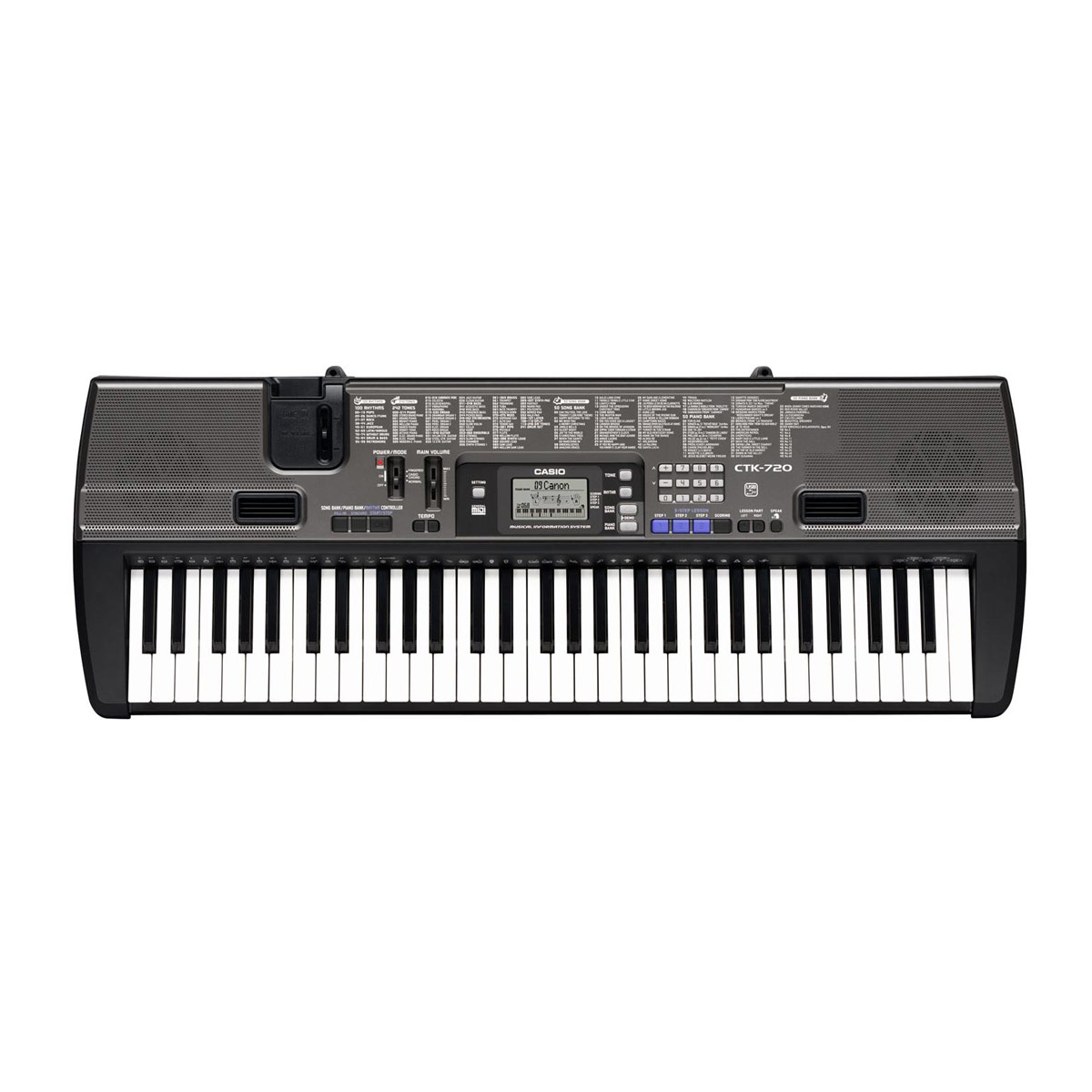
  • The piano or keyboard must have at least 5 octaves (61 keys).  Your child will have enough range to play everything in the LPM curriculum.
Electric keyboards are used by most teachers in class.  If you choose to purchase one for home, they can be found at yard sales, on Craigslist, at black Friday sales, and at many stores.
  • Since keyboards don't need tuning, you probably won't run into a "bad" used one, but it is a good idea to download a free pitch pipe for your smartphone and check that the keyboard is tuned.
  • The 'master tune frequency' should be at 440 Hz. On some keyboards this can be changed and make your keyboard seem out of tune.  Some keyboards also have transpose functions or pitch bender wheels or joysticks- if these get damaged, your keyboard will be out of tune.
  • Although rare, a faulty cable could change the power delivered (and resulting sound) resulting in an out-of-tune keyboard.
  • In our classes we rarely use the myriad of fun programmable functions, except in 3rd year when playing ensemble pieces like "Song of Joy".  So choose a keyboard that makes you happy.
Digital Keyboard

Keep in mind, however, that a better piano is more likely to be exciting for your child to play, and you may want to start with something better, or upgrade after the Green or Yellow semester.  Most families choose an upright for their first acoustic piano and only upgrade to a grand piano years later if the need arises.

The largest of the uprights is the studio piano, which is 44 inches or taller.  Slightly shorter uprights, 39 to 42 inches tall, are referred to as consoles.  Spinets, 36-37 inches high, do not have great sound and have an inferior action configuration to consoles and studios.


  • Make a point of visiting reputable showrooms to play some low, medium, and high chords and scales on various pianos- notice the different tone (mellow, bright, loud, soft) produced by each piano.  Tonal preference is very subjective and your opinion and budget matter more than the expert's when making a choice. 
  • Also take notice of the touch (the movement and resistance as you press down) of the keys on various models.  This will be dramatically different from the electric keyboards.  Find a touch that is pleasing.
  • Once you've narrowed it down to 2-3 choices, be sure to have your child test drive the pianos and help you choose which one is exciting to him.  You're in this together!  If he is already in Green or Yellow semester, he can play several songs on each piano to get a feel for them.
If you love the idea of the acoustic piano, but want to buy a used piano, be aware that it is possible to get stuck with a bad piano.  Remember some tips from the piano technician's guild
  • Buy a used piano from a dealer if possible (reconditioned, with a warranty)
  • If buying from a private seller, coordinate to have a piano tech guide you and check for problems (just as you would have a used car checked by a mechanic!)
  • Beware of: single keys that are out of tune, single keys that seem to be playing 2 notes, buzzing or rattling sounds, plastic components, or deep grooves in the hammers.
  • Beware of "free" or extremely cheap pianos- they likely have serious problems that would be expensive to repair in order to provide an enjoyable and quality instrument.
One final instrument you might consider is a digital piano.  With a full keyboard (81 keys),  touch sensitivity that mimics acoustic pianos, and pretty great sound, digital pianos are becoming very popular.  They add lightweight portability and relieve the need for tuning.  When your musician becomes very accomplished in years to come, he will still likely desire a switch to an acoustic piano.
  • Sample the digital piano both with and without headphones on to see how it sounds each way.  The option of playing with headphones can be a very attractive bonus!
  • Test the touch of the keys - do they feel like an acoustic piano?  Is the sound sensitive to how hard or fast you strike the key? After striking a key, does the sound reverberate for a few moments (like a piano) or stop immediately (like an electric keyboard)?
  • Play a glissando.  How many notes can play simultaneously, and do you notice notes dropping?
  • Does the sustain pedal have differing levels of sensitivity or is it just on/off?
Whichever style of instrument you decide to purchase, be sure to have it ready before Green semester lesson 1, set up in a comfortable and easily-accessible place in the house.  Your child will be practicing at least 5 times each week, so build excitement by making the instrument and the surroundings inviting and uncluttered.  If the process of buying an instrument seems daunting, your local dealer may also rent pianos and digital pianos so you can fall in love with your instrument before making the commitment.  Good Luck!

-Gina Weibel, MS
Let's Play Music Teacher